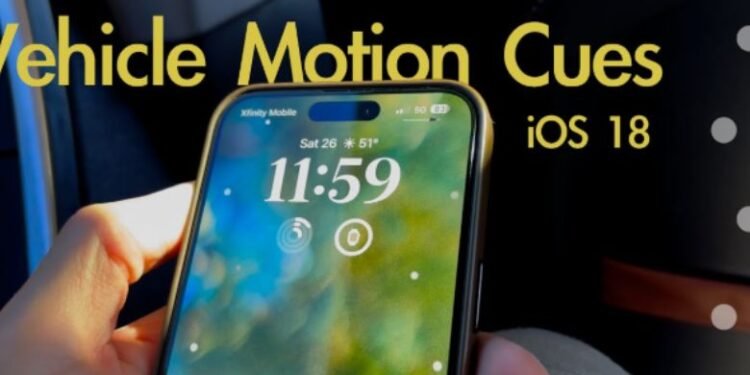
Discover Vehicle Motion Cues iOS 18 and learn how it helps reduce motion sickness on long rides with your iPhone.
Have you ever found yourself in the backseat of a moving car, scrolling through your iPhone, only to suddenly realize that uneasy feeling creeping in? I’ve been there countless times… Long trips where you try to catch up on messages or watch a quick video. When it was over, I regretted ever touching my phone. As someone who loves exploring the latest Gadgets & Reviews, I know this struggle is all too real.
Okay, Apple It seems to have heard our collective groans with their iOS 18 Update, introducing something Vehicle Motion Cues iOS 18.
If you want to know what it is, how it works, and whether it can actually save your stomach from the turmoil of motion sickness, stay around. I’ll tell you the ins and outs. With tips, tricks and more personal insights He makes this feature worth trying.
What are Vehicle Motion Cues?
Simply, Vehicle Motion Cues iOS 18 is Apple’ s solution to motion sickness When using your iPhone Or in an iPad a moving vehicle.
The function utilizes visual cues… Small animated dots which is displayed your screen and transfer in sync the motion of the car first glance, It seems esteem a minor cosmetic update, But the magic Tells lies the science behind This
Our brains often find mixed signals when our eyes understand one type of motion, But our inner ear Another consciousness This sensory conflict is a major culprit behind motion sickness.
Acts as moving dots on a bridge, What should I do? your eyes See with what your body feels, Helps to calm down your queasy nerves.
Imagine sitting inside the back of a taxi, take in the scenery While your phone screen Simulated correctly the movement It’s basically what you have around you Apple is the purpose of The dots
When you change accurately, or when you brake, the top may move slightly to the left. Over time, your mind begins to reconcile the conflicting signals, to reduce that nauseous feeling.
How Vehicle Motion Cues Technical work
Here’ s Where it happens a bit geeky… But trust me, it’s interesting.
Vehicle Motion Cues iOS 18 It just isn’t a random animation slapped on your screen. It depends a combination of sensors: In accelerometer and gyroscope your iPhone Or the iPad work To figure it out together motion patterns
As opposed to relying entirely on precision GPS speed, which may be incorrect or delayed, these inertial sensors review on real- time motion, to allocate precise feedback even in tunnels or areas with weak GPS.
The system is smart enough to try to ascertain if you are a passenger in a vehicle instead of just walking around your phone.
Automatic activation only tries to change on when it detects its relevant vehicle motion.
However, here’ s Stove: It’s not perfect. I my personal experience, Sometimes it wouldn’t activate when I ran a smooth drive, Or stayed after that the ride While finished
the automatic mode Simple, yes a manual toggle by Control Center is a lifesaver. This allows you to activate the feature only when needed, which is especially helpful if you realize the journey It’s going to be long and tough.
To customize Vehicle Motion Cues
Apple Just didn’t provide us one- size- fits- all solution; They made it Vehicle Motion Cues iOS 18
Customization is exceptional because motion sickness varies from person to person, and so do our visual preferences.
You can adjust:
Try: Choose Between typical or dynamic dot movement.
Color: Select a color that stands against your screen content.
Visibility: Increase dot size or for density better perception.
I personally prefer to use the dynamic pattern with a little larger dots because it creates another noticeable motion cue. It helps my brain sync with the movement of the vehicle.
For everyone else, the regular pattern is less annoying and may be enough to do the job. The key is experience.
To activate the feature It’s uncomplicated:
navigate Settings→ Accessibility→ Motion→ Vehicle Motion Cues
Or just add the toggle to your Control Center to quick access.
When you try different settings, you obtain a sweet spot. It works for your eyes, your consciousness, and most importantly, your stomach.
Real- World Experiences and Tips
Here’s where things get really interesting. By reading the forum, Reddit Threads etc personal anecdotes, It is obvious that Vehicle Motion Cues iOS 18 can be a game- changer… But it isn’t a miracle cure.
Some travelers report approx complete relief from motion sickness but long drives. Others obtain it with the dots engaged, especially smaller vehicles Or when you’re trying to concentrate work.
My own experience? He helped a lot during this three- hour bus ride last month. I position the pattern to move and adjust the size a little, for the first time I could scroll through it for ages without any anger creeping up.
A few practical tips from my journey and user Experiments:
- Best for travelers, not drivers: Security first. The purpose of this feature is to observe movement, not active driving.
- Forward- facing seats work Best: The motion Gestures are synchronized more effectively when facing each other the direction of travel.
- Manual toggle More reliable can be: Especially On devices that sometimes struggle with automatic detection.
- Test different patterns and sizes: All their motion sickness The threshold is different.
If you are a frequent traveler or allocate too much time on the road, small adjustments make a big difference.
Broader Context and Future of Vehicle Motion Cues
Apple doesn’t stop at iPhones. Rumors And reports illustrate it that Vehicle Motion Cues iOS 18 Will eventually spread macOS, to provide similar benefits to MacBook users By train or bus.
It shows Apple’ s commitment to accessibility and user comfort across its ecosystem.
Interestingly enough, Android Also searching similar features I its latest versions, It appears the industry Recognizes the importance to reduce motion sickness Too digital
Apple, It’s not just about a feature… It’s about making it a more comfortable, inclusive user experience which is consistent with real- world use.
The Key Takings:
To sum it up, Vehicle Motion Cues iOS 18 is more than just animated dots on your screen… it’s a carefully engineered solution to a common, often overlooked problem. It combines science, sensor technology, and thoughtful customization to help reduce motion sickness. While it has its limitations and might not work perfectly for everyone, the feature is a significant step forward in mobile accessibility and comfort.
Here’s a quick recap:
- Leverages visual cues to align brain and body perception.
- Uses accelerometer and gyroscope data for accurate real-time motion detection.
- Offers manual and automatic activation for flexibility.
- Provides customization options for patterns, colors, and visibility.
- Shows real-world variability in effectiveness… Personal testing is key.
- Represents a broader accessibility initiative and hints at future ecosystem expansion.
Additional Resources:
- Apple Support — Use iPhone more comfortably while riding in a vehicle: Official Apple guide explaining how to turn on and customize Vehicle Motion Cues in iOS 18 to reduce motion sickness while riding.
- MacRumors — iOS 18: Prevent Motion Sickness With Vehicle Motion Cues: A detailed walkthrough of the feature, how it works, and steps to enable it via Settings or Control Center.